22 Nov 2026
Mapping the Supply Chain of Certified Gaming Software from Development to Deployment in Regulated Markets
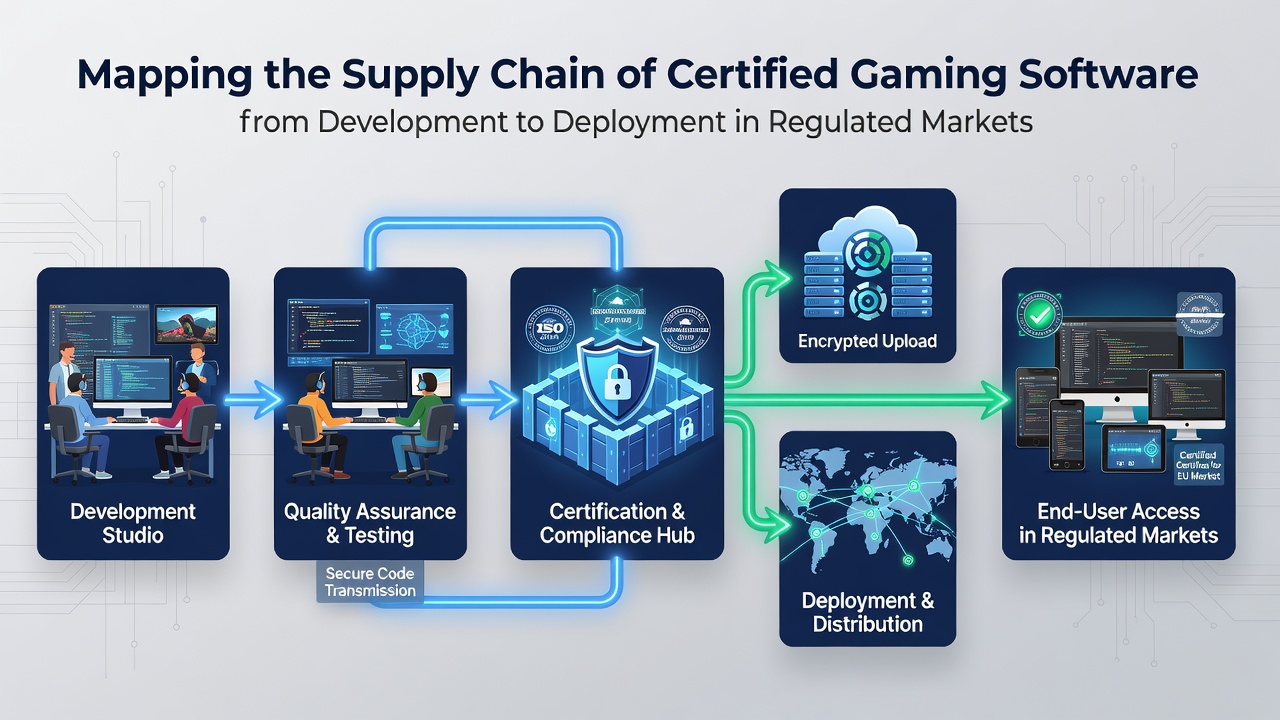
Software that powers regulated gaming platforms follows a structured path from initial coding to live operation across multiple jurisdictions, and observers note how each stage incorporates testing protocols that align with local statutes. Developers begin by creating core modules for game mechanics, random number generation, and user interfaces while adhering to technical standards set by licensing bodies. These teams often operate in specialized facilities equipped with version control systems and security frameworks that log every modification.
Initial Creation and Internal Validation
Teams assemble the software using established programming languages and integrate encryption layers to protect data transmission. Internal quality checks occur at regular intervals before any external submission, and data shows that many studios maintain dedicated compliance officers who review code against regional requirements from the outset. This phase includes simulation runs that mimic high-volume player traffic to identify performance bottlenecks early.
Independent Laboratory Testing
Once developers complete preliminary builds, the files move to accredited testing laboratories that evaluate random number generators for statistical integrity and confirm that payout percentages match submitted specifications. Laboratories issue detailed reports that document test methodologies and outcomes, and these documents travel with the software package to the next approval stage. Researchers have observed that labs coordinate with multiple regulators simultaneously when software targets several markets at once.
Regulatory Review and Certification
Authorities in each target jurisdiction examine laboratory findings alongside operator background materials before granting certification. The process often involves iterative feedback where developers adjust features to satisfy jurisdiction-specific rules on responsible gaming tools and data privacy measures. Evidence indicates that certification timelines vary by region yet follow consistent documentation standards that allow cross-border recognition in some cases.
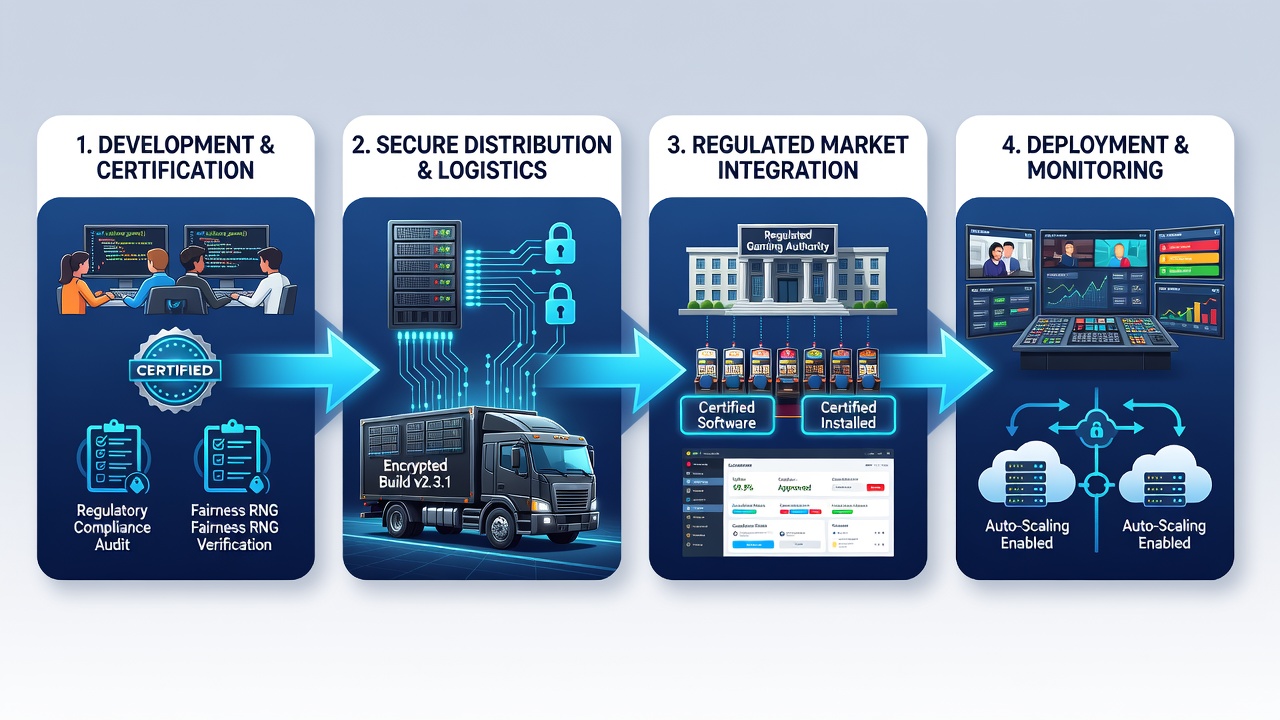
European authorities such as the Malta Gaming Authority maintain databases that track certified software versions, and similar systems exist in North American states overseen by bodies like the Nevada Gaming Control Board. Updates to certified titles require fresh submissions when core algorithms change, which keeps the supply chain active throughout a product's lifecycle.
Distribution to Licensed Operators
After certification, secure delivery channels transfer the software to operators who integrate it into their platform infrastructure. Distribution partners use encrypted repositories and access controls that log every download and installation attempt. Those who manage these handoffs report that version control remains essential because even minor patches must carry updated certification references.
Live Deployment and Ongoing Monitoring
Deployment occurs on servers located within approved data centers that meet physical security and uptime requirements. Real-time monitoring systems track game performance and flag anomalies that could indicate tampering or technical faults. Regulatory frameworks require operators to retain detailed logs for audit purposes, and data from industry reports shows that continuous oversight extends the supply chain beyond initial launch into routine maintenance cycles.
Cooperation between labs, regulators, and operators relies on shared technical specifications that reduce duplication of testing efforts. In November 2026 several jurisdictions plan to align their RNG testing parameters further, which could streamline submissions for software intended for multiple continents. Academic studies on digital gaming compliance highlight how these coordinated approaches affect both development costs and time to market.
Conclusion
The supply chain for certified gaming software connects distinct phases that each enforce technical and legal safeguards before deployment in regulated markets. Documentation flows alongside the code itself, and verification steps accumulate evidence that satisfies diverse licensing conditions. Observers note that this structured progression supports consistent operation across borders while adapting to evolving regulatory expectations.