27 Sep 2026
Analyzing Cross-Border Licensing Hurdles That Shape Software Compliance for European Digital Gaming Operators
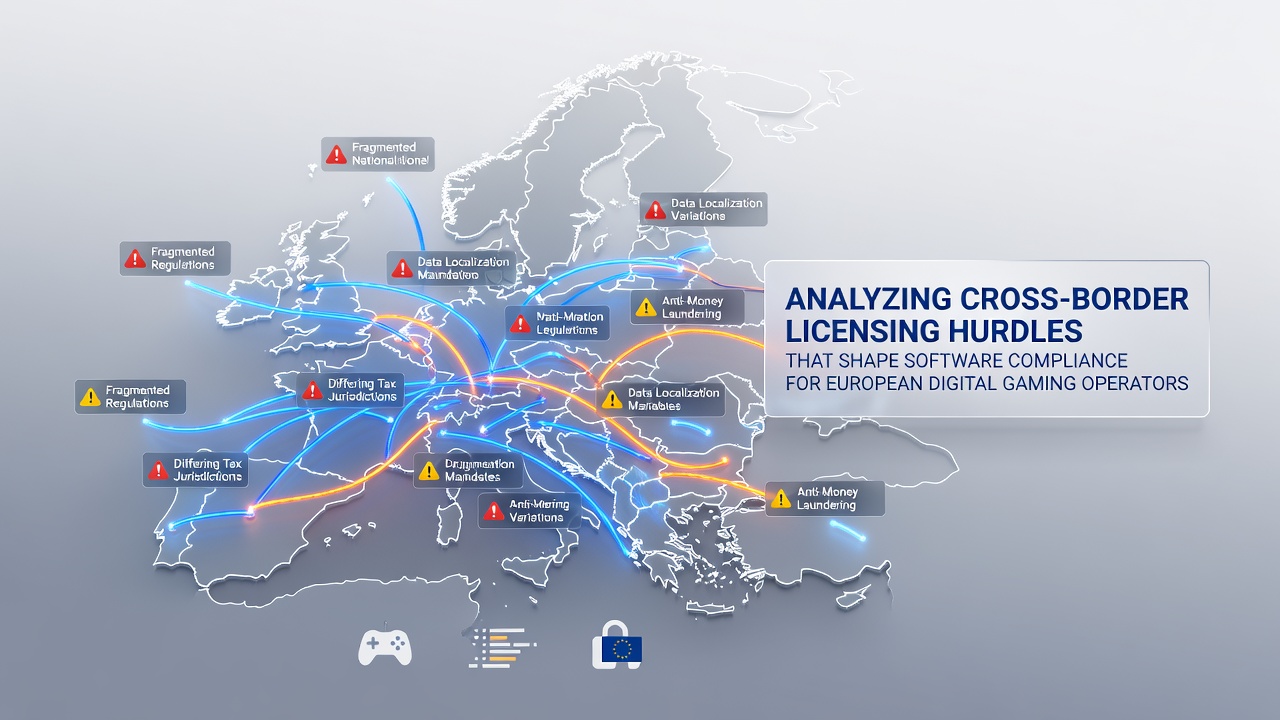
European digital gaming operators face a patchwork of national licensing systems that create distinct obstacles when software must meet compliance standards across multiple jurisdictions at once. Each country maintains its own certification processes for random number generators, player data protection modules, and transaction security protocols, which means operators licensed in one member state often encounter fresh testing requirements before they can offer games in another. Data from regulatory filings shows that these repeated audits drive up development costs while delaying product launches by months in many cases.
National Variations in Software Certification
Germany requires independent labs to verify every software update against strict technical guidelines issued by the Gauselmann Group standards body, whereas the Netherlands emphasizes real-time monitoring interfaces that connect directly to the national gambling authority's oversight platform. Observers note that operators attempting to maintain a single codebase across borders must therefore maintain separate compliance branches, each tailored to local rules on game fairness reporting and audit trail retention. Research indicates that smaller studios without dedicated legal teams struggle most with these fragmented demands, often outsourcing certification work at premium rates.
Mutual Recognition Shortfalls
Although the European Union promotes the digital single market concept, mutual recognition of software licenses remains limited in the gaming sector. An operator approved under Maltese regulations still needs additional validation when entering the Spanish market because local rules mandate specific encryption levels for user authentication that exceed Malta's baseline. According to the European Commission digital strategy documents, efforts to harmonize these technical thresholds continue yet progress stays slow due to differing consumer protection priorities among member states. This forces companies to allocate resources toward parallel certification tracks rather than unified development pipelines.
Cross-border expansion also collides with data localization rules that affect how software handles player information. Some jurisdictions insist that all transaction logs remain on servers physically located within their borders, which complicates cloud-based solutions used by many international operators. Those who've studied this landscape know that such requirements create extra layers of compliance checks whenever software updates touch database architecture or logging functions.

Technical Testing Overlaps and Delays
Software compliance testing frequently overlaps across borders, yet each authority demands its own set of test cases and documentation formats. One study revealed that operators spend an average of 18 weeks securing approvals in three separate countries when the underlying game engine remains identical. The reality is that labs in different regions apply slightly different statistical thresholds for randomness verification, which means passing one set of tests does not automatically satisfy the next. Experts have observed that these inconsistencies push larger operators toward modular software designs that allow quick swaps of compliance components without full recertification.
September 2026 marks the scheduled implementation date for updated EU-wide guidelines on digital service interoperability, and gaming operators are already preparing software architectures to accommodate anticipated changes in cross-border data sharing protocols. Industry reports show that firms investing early in flexible API structures expect fewer hurdles once the new framework activates. Meanwhile smaller operators continue to monitor developments closely because budget constraints limit their ability to redesign systems on short notice.
Case Examples from the Field
Take one operator that expanded from Sweden into Belgium in 2024 and discovered that its existing age verification module failed Belgian technical audits due to differing biometric matching accuracy standards. The company had to commission additional development work and repeat testing cycles before launch, adding four months to the rollout timeline. There's this case where experts found similar patterns repeated across multiple market entries, confirming that software compliance remains one of the primary bottlenecks in regional scaling strategies.
Academic research from the University of Malta's gaming studies program highlights how licensing timelines vary dramatically based on the number of jurisdictions involved, with multi-country projects consistently showing higher rates of scope creep during the certification phase. Figures reveal that operators who maintain in-house compliance teams reduce average approval times by roughly 30 percent compared with those relying solely on external consultants.
Looking Ahead
Regulatory bodies continue to refine their approaches to software oversight, and observers expect further convergence in testing methodologies over the coming years. Yet national differences in consumer protection priorities mean complete harmonization stays unlikely in the near term. Operators that build adaptable compliance frameworks now position themselves to handle future cross-border expansions with fewer repeated audits and lower incremental costs.
Conclusion
Cross-border licensing hurdles continue to shape how European digital gaming operators approach software compliance, driving investment toward modular architectures and early regulatory engagement. As standards evolve ahead of the September 2026 updates, companies that track these shifts closely will navigate the fragmented landscape more effectively than those that treat each market in isolation. The ball remains in the operators' court when it comes to aligning technical development with the diverse requirements that define the European gaming sector today.